
Handgun Ammo Buying Guide: Ballistics, Calibers, and Self-Defense Rounds
A single .45 ACP cartridge can generate over 12,000 psi of pressure, yet its recoil Ammunition for Sale is manageable enough for one-handed shooting. Handgun ammo works by igniting a primer that burns powder, sending a bullet down the barrel at speeds often exceeding 1,000 feet per second. Jacketed hollow points expand on impact, creating a larger wound channel while reducing the risk of over-penetration—a key reason they’re favored for defense. Match-grade rounds offer tighter accuracy for sport, but always test a few brands in your firearm to find the most reliable feeding and cycling.
What Actually Happens Inside the Barrel When You Pull the Trigger
When you pull the trigger, the striker or hammer drives the firing pin into the primer, igniting a chemical compound that sends a flash through the flash hole into the case. This ignites the propellant powder, which deflagrates—burns rapidly, not explodes—releasing high-pressure gas. That gas expands, forcing the bullet out of the case mouth and into the barrel’s forcing cone, where it engages the rifling. The lands and grooves cut into the bullet’s surface, imparting spin for gyroscopic stability in flight. Pressure peaks and then drops as the bullet travels down the bore, exiting the muzzle with the remaining gas and a loud report. The entire sequence takes roughly one millisecond, with peak pressure hitting around 35,000 psi in standard 9mm loads. Q: Why does the barrel feel hot after a few shots? A: Because each ignition transfers significant heat into the steel from the burning powder and bullet friction. That heat buildup affects point of impact over long strings.
The Four-Stage Ignition Cycle Explained in Plain Terms
The Four-Stage Ignition Cycle Explained in Plain Terms begins the instant the firing pin strikes the primer. Stage one is *ignition*, where the primer compound crushes and detonates, sending a hot flash into the case. Stage two, *combustion*, sees that flash ignite the propellant powder, which rapidly burns and converts solid grains into high-pressure gas. Stage three, *expansion*, is the gas forcing the bullet out of the cartridge case and down the bore’s rifling. Stage four, *exit*, occurs when the bullet clears the muzzle, releasing the remaining gas pressure. Understanding the four-stage ignition cycle clarifies why consistent primer seating and powder charge matter.
Q: What is the most critical variable in the four-stage ignition cycle?
A: Consistent primer ignition, since a weak or delayed primer disrupts 6.8 SPC Ammo for Sale the entire burn sequence and alters bullet velocity.
Why Bullet Weight Changes the Way Your Gun Feels and Kicks
Heavier bullets, such as 230-grain .45 ACP loads, produce a slower, more pronounced push because their greater mass requires more propellant gas to accelerate, transferring that energy as a sustained shove into your palm and wrist. Lighter projectiles, like 115-grain 9mm rounds, reach higher velocities with a sharper, snappier impulse—the recoil arrives faster and dissipates quicker, making the muzzle rise feel more abrupt. This difference also alters lock time and slide velocity: heavier rounds cycle the slide with more momentum, softening the perceived kick but extending the time before the sights return, while lighter loads feel crisper but can induce more muzzle flip during rapid fire. **Recoil impulse .35 Remington Ammo for Sale timing**, not just force, is why your grip must adapt to bullet weight.
Q: Why does a lighter bullet sometimes kick harder than a heavier one despite having less mass?
A: Because recoil is a product of momentum—mass times velocity. A light bullet moving very fast can generate equal or greater momentum than a heavy, slow bullet, but it delivers that energy in a shorter time window. That compressed delivery translates to a higher peak force, which your body perceives as a sharper, harder crack instead of a heavy, rolling shove.
How to Match the Right Cartridge to Your Specific Handgun
Matching the right cartridge to your specific handgun begins with the firearm’s stamped caliber, but this is only the floor. For revolvers, verify the exact cartridge name—such as .38 Special versus .357 Magnum—since the longer cylinder accepts both, while the shorter does not. For semi-automatics, the barrel hood and breech face dictate headspace and case rim dimensions, so never force a cartridge that doesn’t chamber freely. Check the owner’s manual for approved pressure levels, especially with +P or +P+ loads, as subcompact blowback designs may not tolerate these. *A cartridge that chambers is not automatically safe to fire if the case length or bullet profile conflicts with the feed ramp.* Always test a single round of your chosen brand, then cycle the slide manually to confirm extraction. Finally, match bullet weight to your barrel’s twist rate—for example, 115-grain versus 147-grain 9mm—to ensure stable accuracy and reliable function without damaging the locking lugs.
Reading the Caliber Markings: What Those Numbers and Letters Really Mean
Reading the caliber markings on your barrel or slide is the first non-negotiable step to safe ammunition selection. The numbers typically indicate bullet diameter in inches or millimeters—like .45 ACP meaning 0.45 inches—while letters denote cartridge design or powder type, such as “ACP” (Automatic Colt Pistol) versus “AP” (Auto Pistol). A “9mm Luger” is not interchangeable with “9mm Makarov,” even though both share a 9mm bullet width; case length and pressure differ drastically. Check the stamp before loading, cross-reference it with your manual, and never rely on visual similarity alone. Follow this sequence: locate the marking, decode the unit, verify the exact suffix, then confirm against the box label.
How to Check If a Round Will Feed Reliably in Your Magazine
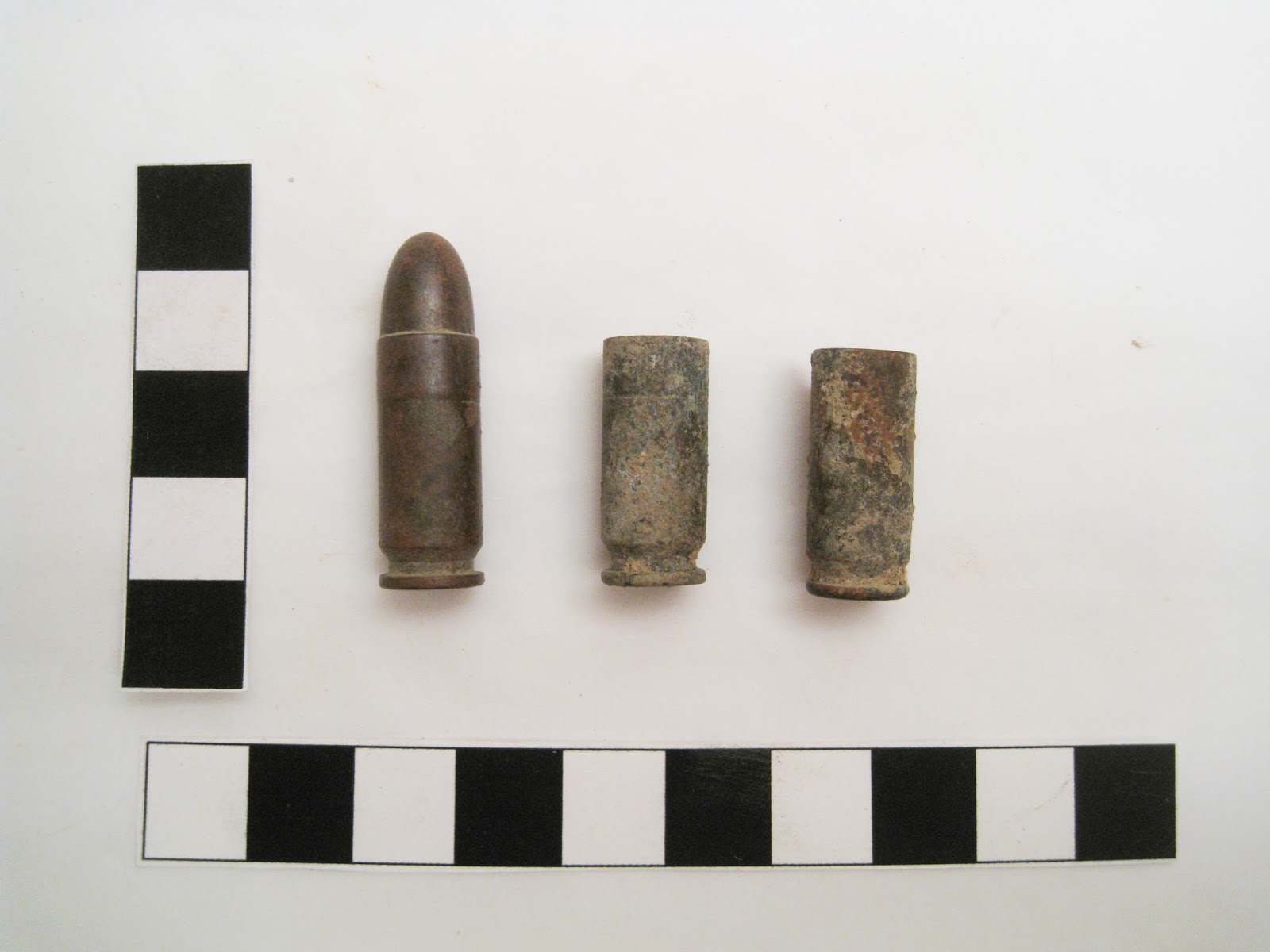
To verify feeding reliability, begin by hand-cycling dummy rounds—never live ammunition—through your pistol’s action. Load a full magazine, rack the slide slowly, and observe whether the round’s case rim slides under the extractor without catching. Repeat with the slide released at full speed, as slow cycling masks timing issues. Next, test the magazine’s follower .338 Lapua Ammo for Sale pressure by removing one round at a time; a weak follower often causes nose-diving on the feed ramp. Finally, check the cartridge’s overall length against your barrel’s chamber—if the bullet’s ogive contacts the rifling prematurely, it will stop short. **Inspect the feed ramp for burrs** after each test, as even tiny defects cause repeated jams.
Q: How do I know if a round’s shape is too blunt for my magazine?
A: Load a full magazine, then shake it firmly. If any round shifts forward and the bullet tip rests above the case of the round ahead of it, the profile is too blunt—this creates a stacked-wall jam during the slide’s forward stroke.
Choosing Between Full Metal Jacket and Hollow Points for Your Needs
Choosing between full metal jacket (FMJ) and hollow point (HP) handgun ammo hinges on your specific goal. For range practice and skill building, FMJ’s hardened lead core and copper jacket feed reliably, reduce barrel fouling, and cost less per round—making it ideal for high-volume training where expansion is irrelevant. For personal defense or hunting, hollow points are superior because their open cavity expands upon impact, creating a larger wound channel and transferring more energy to a soft target while drastically reducing the risk of over-penetration through walls. However, a hollow point’s expansion can be unreliable if it passes through heavy clothing or barriers before reaching flesh, so test your specific load in your firearm. If you carry a compact pistol for self-defense, choose HPs for stopping power, but always verify that your handgun cycles them without jamming. Conversely, reserve FMJs strictly for target use and malfunction drills, since their 6.5x57R Ammo for Sale penetration can endanger bystanders in a real-world scenario.
When to Pick FMJ for Practice and Why It Keeps Its Shape
Choose **FMJ for practice** whenever your goal is repetitive, high-volume drills focused on sight alignment and trigger control. Its solid copper jacket prevents lead fouling in the barrel, letting you shoot hundreds of rounds without cleaning-induced stoppages or accuracy shifts. Because the jacket fully encases the lead core, it resists deformation upon feeding, so the bullet’s ogive and crimp remain unchanged through magazine compression and chambering. This dimensional stability means your point of impact stays consistent session after session, unlike softer lead tips that might flatten and alter ballistic behavior. Only if you practice with the exact hollow-point load you carry will FMJ’s shape advantage become irrelevant, but for general marksmanship, its cost-efficiency and predictable feeding are unmatched.
Q: When should you pick FMJ for practice, and why does it keep its shape?
A: Pick FMJ for practice when you prioritize extended range time and mechanical reliability over terminal effect. It keeps its shape because the full metal jacket is a rigid, continuous barrier that shields the softer lead core from impact stress during feeding, preventing the tip deformation that can cause jams or inconsistent accuracy.
How Hollow Points Expand and Why That Expansion Saves Lives in Self-Defense
When a hollow point strikes soft tissue, hydraulic pressure forces the bullet’s nose to peel open into a wider, mushroom-like shape, dramatically increasing its diameter. This controlled expansion in self-defense creates a larger wound channel while dissipating energy more rapidly, which is why it stops threats faster than a full metal jacket that simply punches through. Expansion reduces over-penetration risk—the round stays inside the attacker or exits with far less velocity, so innocent bystanders behind the target are safer. The reliable expansion also causes more significant tissue disruption, triggering quicker physiological response and ending the confrontation sooner, which directly preserves your life.
Understanding Velocity and Energy: What the Ballistics Chart Tells You
The ballistics chart for your handgun ammo tells a story, not just numbers. When you see velocity—say, 1,150 fps from a 9mm—that’s the bullet’s initial rush, but it decays fast at defensive distances, so a flat line on the graph means little. Energy, in foot-pounds, is the plot twist: it’s the terminal performance your bullet delivers on target, and it drops as speed fades. For your concealed carry load, you want a chart where velocity stays high enough to expand, yet energy remains above 300 ft-lbs at 10 yards. Picture a dark alley—the chart’s 25-yard column shows you whether that hollow point still punches through denim and heavy clothing. A steep drop means your ammo is a sprinter, not a slugger. Read the chart to pick a round that keeps its energy transfer honest when it matters, not just at the muzzle.
How to Use Muzzle Velocity Numbers to Predict Drop at 25 Yards
Muzzle velocity is your primary tool for predicting 25-yard drop because it dictates how long the bullet remains in flight, and gravity acts on it for that entire duration. A higher muzzle velocity reduces bullet flight time, meaning less vertical drop before impact. To use the number, take your published velocity (e.g., 1,150 fps for a 9mm) and compare it to a broad baseline: a 1,000 fps load 6.5x57mm Mauser Ammo for Sale typically drops about 2 inches at 25 yards with a 15-yard zero, while a 1,250 fps load drops closer to 1.2 inches. For precise prediction, divide the distance (75 feet) by your velocity in feet per second to get flight time, then multiply that time squared by 16.1 (gravity constant). Compare that calculated drop against your sight height and zero distance to adjust your hold. This method works because flatter trajectories from faster loads let you aim dead-on rather than holding over.
- Calculate flight time: 75 feet ÷ muzzle velocity (fps) = seconds of gravity exposure.
- Multiply flight time² × 16.1 to get actual drop in feet, then convert to inches.
- Add your sight-height offset (usually 0.5–1 inch) to the drop figure for your exact hold-over.
- Trust the trend: every 100 fps faster translates to roughly 0.2 inches less drop at 25 yards.
Why Energy Figures Matter More for Penetration Than for Stopping Power
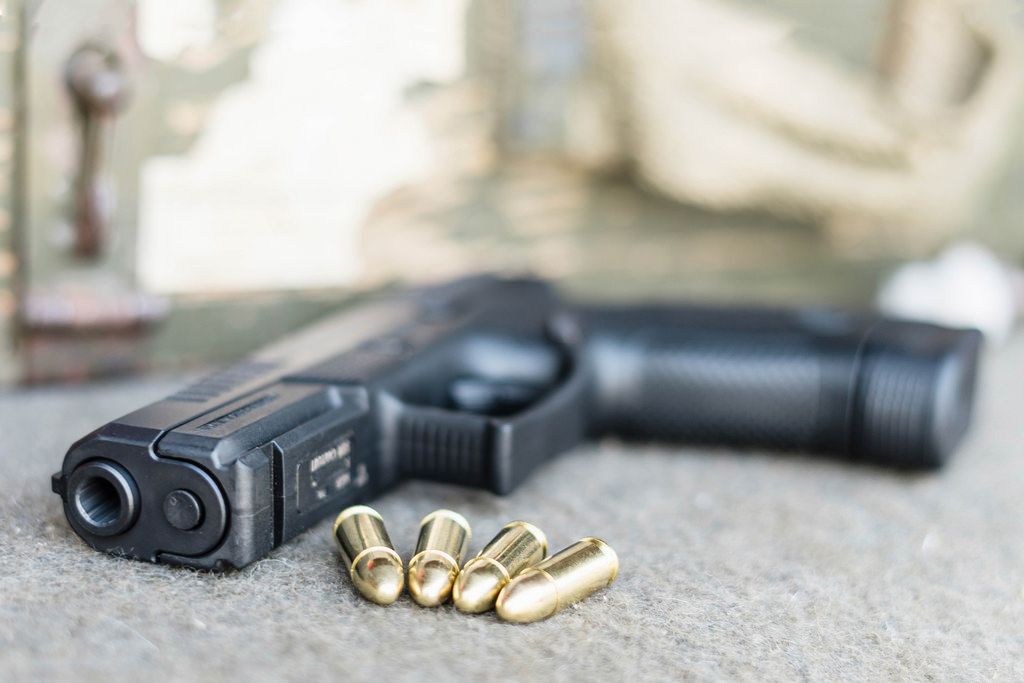
Energy figures in handgun ballistics primarily predict penetration depth, not immediate incapacitation. Because tissue resistance absorbs kinetic energy, a round with higher foot-pounds will drive deeper through dense barriers like bone or heavy muscle, ensuring wound channel length. Conversely, stopping power relies more on shot placement and permanent cavity diameter, which depend on bullet expansion and caliber, not raw energy transfer. A slow, heavy slug may penetrate deeply yet produce a narrow hole, while a fast, light load can dump energy superficially without reaching vital organs. Thus, energy thresholds help you select ammunition for adequate penetration through clothing or concealment, but they offer limited insight into how quickly a threat will cease action. Prioritize penetration consistency over peak energy values when evaluating defensive loads.
Tips for Storing and Rotating Your Ammunition So It Always Fires
For handgun ammo to fire reliably, keep it in a cool, dry place—a sealed ammo can with desiccant packs beats a basement shelf. Always store rounds in their original box or a snug tray so primers don’t get jarred. https://specialtysportsandsupplyltd.com/ Rotate by marking the purchase date with a Sharpie, then shoot the oldest box first every range trip. A simple “last in, first out” rule works, but every six months, pull a few rounds to check for green corrosion or loose bullets. Never mix new and old rounds in the same magazine, as pressure differences can affect cycling. Q: How often should I rotate? A: At least twice a year, or after any temperature swing over 20°F, to keep firing pin strikes crisp and powder fresh.
How Humidity and Temperature Affect Primer Reliability Over Time
Humidity is the primary enemy of primer reliability, as moisture can gradually degrade the lead styphnate compounds in the primer compound, leading to misfires or hang-fires over months of storage. High temperatures accelerate this chemical breakdown, while extreme cold can cause the primer’s anvil to contract, increasing ignition sensitivity but also risking brittle fractures. For handgun ammo, cycling between high heat and humidity creates condensation inside the cartridge case, which corrodes the primer cup and weakens its seal. To preserve long-term primer reliability over time, store ammo below 75°F and under 40% relative humidity, avoiding attics or garages where temperature swings are severe.
Simple Ways to Inspect Brass for Cracks or Corrosion Before Loading
Before loading handgun ammo, quickly inspect each brass case under a bright light. Look for a distinct green or blue patina near the primer pocket, which signals corrosion that weakens the case. Flex the case mouth gently; any visible hairline crack or dark ring there means discard it. For a reliable sequence, follow these steps:
- Sort cases base-up and scan the entire rim and primer for discoloration or white powdery residue.
- Run your thumbnail over the sidewall—catch any rough, pitted texture indicating oxidation.
- Hold the case up to the light and check the shoulder and neck for dark lines or bright stress marks.
If you see foggy dullness inside the case mouth, 6.5×55 Swedish Ammo for Sale that’s early corrosion—scrap the round. Never load a case with a split mouth or green streaks, as these fail under pressure.
Getting the Best Accuracy: How to Test Different Loads in Your Gun
To nail the best accuracy with your handgun, you must systematically test different loads from a rested position, firing five-shot groups at 25 yards to minimize shooter error. Start with lighter bullets and work up to heavier grains, noting point-of-impact shifts and .32 ACP Ammo for Sale group sizes on a target log. **Settle on the load that delivers the tightest, most repeatable clusters** before making any sight adjustments. Question: “How many rounds per load should I test?” Answer: At least three five-shot groups per load, ideally on separate days, to account for temperature and your own fatigue variations. Also, test different bullet profiles—round-nose flat-point versus hollow-point—since each interacts uniquely with your barrel’s rifling, and always let the barrel cool between groups to avoid heat-induced flyers. Only after this rigorous process should you zero your sights to that winning handgun ammo.

How to Set Up a Quick 15-Round Accuracy Test With Three Brands
To set up a quick 15-round accuracy test with three brands, mount your handgun in a stable rest at 10 yards, using a fresh target per brand. Fire five consecutive five-shot groups per brand, pausing two minutes between magazines to prevent heat-induced flyers. Measure each group’s extreme spread with calipers, recording the average; the brand with the smallest mean group wins. Use identical bullet weights and velocities across brands for a fair comparison. Rotate the firing order between brands to cancel shooter fatigue bias. Only four rounds matter per group, as the first shot from a cold barrel often opens the pattern.
Q: How do I avoid wasting time when switching between three brands?
Pre-load 15 rounds per brand into labeled magazines, and set up three identical targets side-by-side—this lets you run .32 Win Special Ammo for Sale the entire test in under 20 minutes without re-aiming.
Why Recoil Spring Tuning Can Change How Tight Your Groups Are
When you’re testing different handgun loads, the recoil spring is your hidden accuracy lever. A spring that’s too stiff won’t let the slide cycle fully, causing the muzzle to dip mid-return and throwing your next shot off. Conversely, a too-light spring lets the slide slam back, creating a harsh, unpredictable bounce that opens up your groups. Matching the spring rate to your specific ammo’s power factor lets the gun return to battery with the same, repeatable timing every shot. That consistency is what shrinks your spread. Start with a spring that’s a few pounds lighter than factory and test from a rest—you’ll see the groups tighten as the action cycles smoother. Recoil spring tuning directly controls slide return consistency, which is why the same gun can group an inch with one load and three with another.
Getting the spring weight right for your load turns a bouncing slide into a smooth, repeatable cycle—and that repeatability is exactly what shrinks your group size.